
Free Amigurumi Patterns: 10 Small Crochet Animals You Can Finish in a Day

The first amigurumi I ever commissioned was a turtle small enough to sit in a closed fist. I put it on my desk and within a week three people had asked where to get one.
That is the thing about small crochet animals. Nobody needs one, and everybody wants one the moment they see it in a hand for scale.
So here are ten free amigurumi patterns worth a weekend. Seven are originals I commissioned from the crocheter I work with and photographed round by round here on Crochee. Three come from other designers whose animals fill gaps my own shelf does not, linked straight to their posts.

How I picked these ten
Every pattern here is free in full on the page it links to. No email wall, no PDF you have to buy before you can see the rounds.
Every one is also small. The largest is six inches, most are three or four, and all of them use less yarn than a single skein.
I stopped at ten deliberately. A list of sixty amigurumi is a list nobody finishes anything from.
1. Bumble Bee Amigurumi (Free Pattern)

This is where I send people who have never made an amigurumi. It is one small stuffed body, two wings, and a face you embroider on at the end.
Easy level, 6 to 8 cm, about 90 minutes per bee. The only thing past pure beginner is the yellow to black colour change.
Bees are also the one animal here that looks better in a crowd, which is why that photo has seven of them. The free bumble bee amigurumi pattern photographs the colour change round so the stripe does not come out crooked.
2. Tiny Pocket Turtle (Free Pattern)

The one that started the site. Two-tone shell, stubby flippers, and a face that reads friendly from across a room.
Intermediate on paper, though any confident beginner who can work back loop only will manage it. About 10 cm, 1 to 2 hours, and under three dollars of yarn.
The back loop round is what gives the shell its rim instead of a flat dome. The free tiny pocket turtle pattern has a photo for every round of it. It is also one of the ten sea creatures in my crochet ocean animals roundup.
3. Jelly Bean Bunny by Darling Maple Designs

I do not have a single mammal on my own list, and this is the gap I would fill first. Bunnies are the amigurumi people actually ask for.
It is worked in super bulky chenille on a 5 mm hook, which is a completely different feel from the milk cotton everything of mine is made in. Fat yarn, fast rounds, no stitch definition to fuss over.
Fully no sew, 3.5 inches, and genuinely done in under half an hour once you have made one. Get the free jelly bean bunny pattern from Darling Maple Designs.
4. Leggy Frog (Free Pattern)

The long dangly limbs are the whole joke, and they are the reason this one is easier than it looks. The arms and legs are chains worked straight out of the body, so there is nothing to sew on and nothing to line up.
Beginner friendly, roughly 3 inches tall before you count the legs, 2 to 3 hours.
It is made in plush yarn, which hides tension wobbles better than any other fibre. If your first amigurumi came out lumpy, the free leggy frog pattern is a forgiving second try.
5. Bumble Bee Bag Charm (Free Pattern)

Same bee, finished with a lobster clasp instead of left loose. This is the version that actually leaves the house.
Around 90 minutes including the hardware. The bee is 6 to 8 cm, plus a 25 mm split ring on top.
Where the clasp anchors decides whether it hangs upright or nose-down all day, so the free bumble bee bag charm pattern photographs that step specifically.
6. 20 Minute Duck by StringyDingDing

There is no bird anywhere on my list, and this is the fastest one I could find that still looks like something.
Two to three inches, worsted yarn, 4 mm hook. The beak gets sewn on, so it is not quite no sew, but that is about a minute of work.
The real appeal is that the same body becomes a chicken, a flamingo, a mallard or a seagull with a colour swap. That is five animals for one pattern. Get the free 20 minute duck pattern from StringyDingDing.
7. Axolotl (Free Pattern)

The frilly gills are what everybody reacts to, and they are the last thing you make, so the hard-looking part arrives when you already understand the piece.
Beginner friendly, about 4 inches long, 2 to 3 hours.
Head, body and tail are one continuous piece with no seam anywhere, which is why it stays smooth instead of pinching at the neck. The free axolotl crochet pattern covers the surface stitch that anchors the gills.
8. Tiny Turtle Keychain (Free Pattern)

The pocket turtle again, this time with a keyring through the shell. It is the amigurumi I have given away the most of.
Same 10 cm turtle, same 1 to 2 hours, plus a 25 mm split ring.
A keychain lives in a pocket with keys, so stuffing firmness matters more here than on a shelf piece. The free tiny turtle keychain pattern covers how firm to pack it and which ring survives daily carry.
9. T-Rex by Storyland Amis
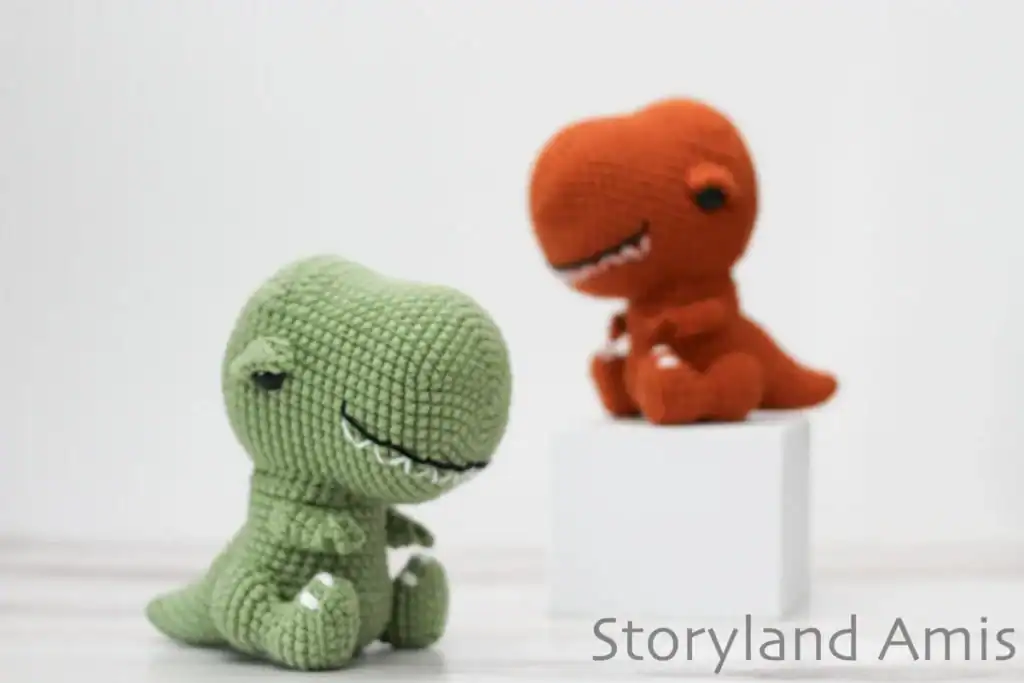
Everything of mine is a charm or a pocket piece. This is the one on the list that is actually a toy.
Six inches tall, worsted yarn, 4 mm hook. It is the biggest project here and the only one with real assembly, since the legs, arms, tail and head all get whipstitched on.
Fair warning, that sewing is most of the work. In exchange the tutorial is photographed in more detail than almost anything else I have linked to. Get the free T-rex pattern from Storyland Amis.
10. Sunflower Turtle (Free Pattern)

The showpiece, and the one I would make if you are only making one. A turtle whose shell is a sunflower, petals and all.
Intermediate, about 5 inches, 4 to 6 hours. That is the longest project on this page by a wide margin.
The clever bit is that one round does two jobs. Its back loops build the underside of the shell while its front loops become the ring of eighteen petals, so the flower is never sewn on. The free sunflower turtle pattern walks that round through thirteen photos.
Which one should you start with
If this is your first amigurumi, make the bee. It is one body and two wings, and a mistake in round four is obvious enough to pull back.
If you tried amigurumi once and hated the sewing, make the jelly bean bunny or the leggy frog. Neither asks you to attach a single limb.
If you want the one that gets a reaction, make the sunflower turtle and set aside a proper afternoon for it.
And if none of the ten appeal because they all lean sweet, the crochet dragon pattern went up after this list was written. It is the same single sphere most of these are built on, with head fins sewn on instead of ears.
| Amigurumi | Skill | Size | Time | Sewing |
|---|---|---|---|---|
| Bumble bee | Easy | 6 to 8 cm | 90 min | Wings only |
| Tiny pocket turtle | Intermediate | 10 cm | 1 to 2 hrs | Head and flippers |
| Jelly bean bunny | Beginner | 3.5 in | Under 30 min | None |
| Leggy frog | Beginner | 3 in | 2 to 3 hrs | None |
| Bumble bee bag charm | Easy | 6 to 8 cm | 90 min | Wings only |
| 20 minute duck | Beginner | 2 to 3 in | 20 min | Beak only |
| Axolotl | Beginner | 4 in | 2 to 3 hrs | None |
| Tiny turtle keychain | Intermediate | 10 cm | 1 to 2 hrs | Head and flippers |
| T-rex | Easy | 6 in | An evening | Extensive |
| Sunflower turtle | Intermediate | 5 in | 4 to 6 hrs | Almost none |
Frequently asked questions
What yarn is best for amigurumi?
Milk cotton in 3 or 4 ply with a 2.5 to 3.5 mm hook is what most of the patterns on this page use. It gives crisp stitch definition and a firm fabric that stuffing cannot poke through.
Plush or chenille yarn is the other option, used here for the axolotl, the frog and the bunny. It is faster and far more forgiving of uneven tension, but you lose the stitch definition entirely.
Why is my stuffing showing through the stitches?
Your hook is too big for the yarn. Amigurumi is worked deliberately tight, usually a full millimetre below what the yarn label suggests.
Go down a hook size and the gaps close. A darker yarn also hides white stuffing better while you are still finding your tension.
What does no sew amigurumi actually mean?
It means the limbs and features are crocheted directly into the body as you go, instead of made separately and stitched on at the end.
It matters because attaching parts symmetrically is the step that defeats most beginners. Three of the patterns here need no attaching at all, and the sunflower turtle comes close.
Are safety eyes necessary?
No. Every pattern here works with embroidered eyes instead, and the bees on this page are embroidered rather than eyed.
If the piece is going to a child under three, embroider them. Safety eyes are secure but they are still a hard part on a soft toy.
Can I sell what I make from these?
For my patterns, yes. Sell the finished animals freely, just do not republish the written pattern itself.
For the three by other designers, check the terms on their own posts. Most allow selling finished items and some ask for a credit link back.
Made one of these?
I would genuinely like to see it. Every pattern of mine on this list came from a real finished piece, photographed round by round before it went up.
If you are giving one away, the smaller makes on this list drop straight into a crochet mini pouch, which is the free pattern I reach for whenever something needs wrapping.
Save this list to your Pinterest board for the next time you want a project you can finish in one sitting. More small makes are in keychains and charms, the flower side of the site is collected in my free crochet flower patterns roundup, and the aquatic ones have their own list of crochet ocean animals where the axolotl and the pocket turtle turn up again alongside a jellyfish, an octopus and a crab.


